

Stover Family Farm & Apiary: Your trusted bee removal experts in Moulton, Alabama

Dedicated to sustainable beekeeping and safe bee removal, Southern Stinger Honey offers humane solutions for unwanted swarms and hives. Explore our premium honey products and join us on our beekeeping journey through our YouTube channel.

Our specialized beekeeping services

At Stover Family Farm & Apiary, we provide a range of services designed to protect both people and pollinators. From bee removal to sharing our beekeeping knowledge, we are committed to practical & sustainable practices and community education.

Swarm removal

Encountered a bee swarm? We do our best to respond as quickly as possible, however, with a full time job this can be hard at times. My full time job puts me in a unique position to be able to not only remove bee's in a residential setting but also industrial plants thanks to my OSHA training.

Hive removal and relocation

When bees establish a hive in an undesirable location, we carefully remove and relocate it tot he best of our ability without harming the bees, ensuring the safety of your property and the well-being of the colony.

Family Fun & Educational content on YouTube

Join us on our YouTube channel to watch our beekeeping in action! We share insights into hive management, and the fascinating world of bees as well as family adventures and fun.

Premium honey products

Taste the sweetness of Moulton, Alabama with our pure, locally sourced honey. Discover our delicious honey and find out where you can purchase our products.

Need bee removal or want to learn more?

Contact Stover Family Farm & Apiary today for expert bee removal services or to inquire about our honey products. We're here to help!

Frequently asked questions about bees

Have questions about bee swarms, hive removal, or our beekeeping practices? We've compiled answers to common inquiries to help you better understand these vital pollinators and our services.
What is a swarm?

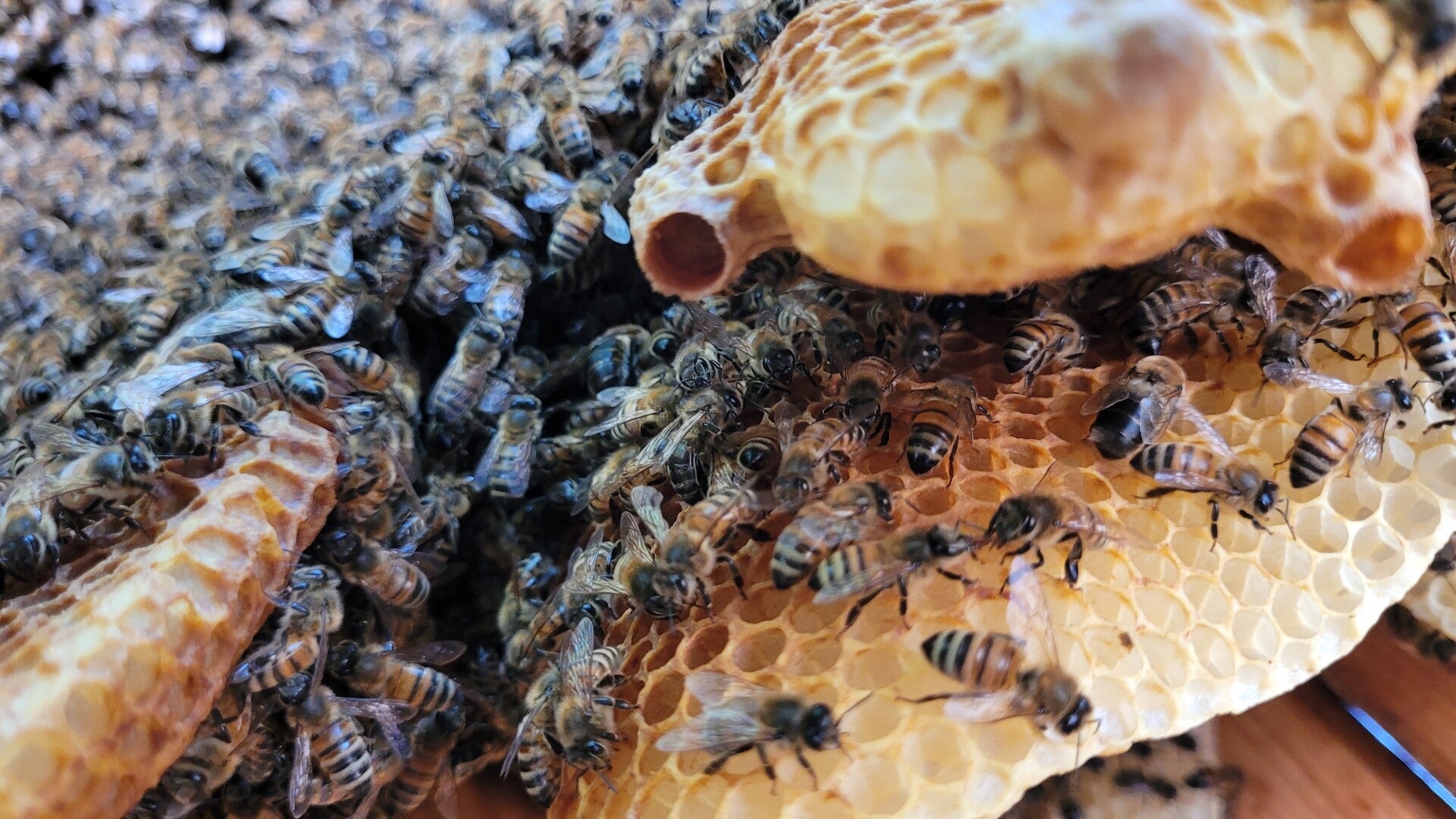
Swarms typically appear in the spring and early summer. A hive will swarm typically when the hive reaches a point that the bee's have started to feel like they are running out of space. The bee's will draw out a queen cell (looks like a peanut) and start making a new queen. Once the queen cell is capped, the existing/old queen will leave the hive and take about half of the bee's in the hive with her to start a new hive.

How do you remove bee's from a building?

This is a hard question to answer because it all depends where the bee's are located. Typically this involves either cutting the wall or ceiling on the interior. It could also mean opening the soffit of the house to access the hive or even a section of roof might have to be removed.

The idea is to remove all the bee's and all of the honey and comb they have built in the space and seal up any entrances the bee's have been using. This takes a lot of time and patience to remove everything the bee's have built and try to prevent future bee's from using the same space again.  

What if you can't cut into the structure to remove the bee's?

We all want to save every bee we can. We know that our food supply depends on pollinators like bees. Sometimes the structure the bee's have decided to make their home can't be dismantled such as a concrete block wall, historic buildings or hollow tree.

This leaves us limited options for a successful removal. We like to take a realistic approach at this point.

  1. We can do a "trap-out" where we limit the bee's ability to access the hive by closing up all of the entrances and giving them a new place to call home.
  2. We can leave the bees in place.
  3. The last resort is to have the bees exterminated by a professional. 

Does it cost for a hive removal to be done?

Yes, it was a tough decision to go this route, but, here are a two of the major contributing factors:

Time: on average a removal will take 8 to 12 hours but can run longer. This is time away from my family and children. With young children, I want to spend as much time with them as I'm able.

Equipment: there is a lot of equipment to just keeping bee's. From the hive with boxes, frames, foundation, top and bottom boards; to the harvest equipment with extractors, uncapping tanks and bottling buckets. Removals are no different with knifes, carpentry tools and even a bee vacuum. All are major investments.

Why has my honey crystalized or turned solid?

As much as you think it’s a bad thing… this is a good thing! It tells you that it’s pure unfiltered raw honey! As honey cools over time the sugar crystals begin to grow as they connect to each other.

But don’t worry! There are a couple of ways to fix this issue and it doesn’t take a lot of time or effort. We typically bottle in plastic bottles so here are two ways to liquify crystalized honey.

  1. Put a pot of water on the stove and heat it to just before it starts to boil. Remove the pot from the heat source and set your bottle of honey in the pot. It might take doing this a few times to get it all liquified once again. It goes without saying, do NOT put the plastic bottle on the direct heat source or in the bot while still on the heat source unless you want to have “plastic honey soup.”
  2. The fastest way is the simplest way. Take your plastic bottle of crystalized honey and a paper towel. Got to your car and place the paper towel on the dash of your car and place the bottle of honey on the paper towel. Make sure you leave your windows rolled up. But even on a fairly cold winter day the solar power of the sun will liquify the honey completely in about 8 hours. It’s perfect to do while you’re parked at work!

Remember, never microwave a plastic bottle because it will melt but you also overheat the honey and will destroy the natural properties.

How far do bee’s travel to gather pollen and nectar?

On average, a bee will travel up to a 2 ½ mile radius from their hive to collect pollen and nectar.

Contact Southern Stinger Honey

Moulton, Alabama, United States

Our hours

Monday - Friday: By appointment
Saturday: By appointment
Sunday: Closed

Call or text us

256-606-5302

Email: daniel.r.stover@gmail.com

Connect with us